Australian Wines


G'Day from Down Under: A Toast to Australian Wines
Australia may be known for kangaroos and the Outback, but its wines are just as wild and wonderful. With sun-soaked vineyards stretching from the rugged Barossa Valley to the cool-climate hills of Tasmania, Australia produces wines as diverse as its landscapes. From bold Shiraz and elegant Chardonnay to emerging natural wines and surprising Pet-Nats, Aussie vintners combine innovation with a deep respect for terroir.
What makes Australian wine special? It's the fearless experimentation, the passionate producers, and the distinctive regions—each offering a unique sip of the continent’s spirit. And yes, many of these vineyards are dog-friendly, making Australia a top contender for globetrotting wine lovers with four-legged co-pilots.

Wine arrived in Australia not long after the first European settlers did. In 1788, with the arrival of the First Fleet, Governor Arthur Phillip brought vine cuttings from the Cape of Good Hope, hoping to establish a wine industry in the new colony. While those early efforts in Sydney Cove struggled, they laid the groundwork for what would become a thriving viticultural tradition. By the early 1800s, settlers and explorers were planting vines more successfully in regions like New South Wales and Victoria. One of the most pivotal figures was James Busby, often dubbed the "father of Australian wine." In 1832, he returned from Europe with a vast collection of vine cuttings—over 600 varieties—which became the genetic foundation for much of Australia’s wine industry.
Throughout the 19th century, vineyards took root in areas like the Barossa Valley, Hunter Valley, and Yarra Valley. These early plantings not only provided table wines for the growing colonies but also helped foster a cultural connection to Europe. Immigrant communities—particularly German, French, and Italian—brought with them winemaking traditions that shaped regional styles still celebrated today. The 1800s saw the rise of Australia's first wine exports and competitions, as well as the founding of family-run estates, many of which still operate today. These pioneering efforts created the backbone of a wine culture that would evolve into one of the most dynamic and respected in the world.

Over the decades, Australian winemakers have embraced both tradition and innovation to shape a truly distinctive wine identity. From the adoption of cool-climate viticulture and advanced irrigation systems to the widespread use of stainless steel fermentation and screw caps, Australia has often led the way in modern winemaking techniques. These innovations have allowed producers to craft wines that are fresh, expressive, and consistent—traits that helped propel Australian wine into the global spotlight. By the 1990s and early 2000s, regions like Barossa, McLaren Vale, and Margaret River were exporting rich Shiraz, crisp Sauvignon Blanc, and elegant Cabernet Sauvignon around the world, earning critical acclaim and establishing Australia as a major player on the international wine stage.

Wine tourism has since become a vital part of Australia’s rural economies and cultural landscape. With over 2,400 wineries across 65 wine regions, cellar doors now double as cultural hubs—offering everything from local art and food pairings to dog-friendly patios and vineyard walks. This growing wine tourism scene not only boosts local businesses but also reinforces wine’s place in Australian social life. Whether it’s a casual backyard BBQ with a chilled Semillon, a celebratory toast with sparkling wine from Tasmania, or a shared bottle on a coastal wine trail, wine is deeply woven into the fabric of Australian gatherings—always accompanied by good food, good company, and often, a loyal pup or two by your side.
While European settlers introduced viticulture to Australia, the land they cultivated had been cared for by Indigenous Australians for tens of thousands of years. Indigenous knowledge of country, climate, and seasonal rhythms—often referred to as “Caring for Country”—has deepened contemporary understandings of sustainable agriculture. In recent years, some winemakers have begun to engage with this knowledge, recognizing the importance of Indigenous stewardship in preserving biodiversity and respecting the cultural significance of the land on which vineyards grow.


Community-led initiatives are also reshaping the face of Australian wine, with a growing focus on inclusivity and representation. Programs like Indigiearth, The Indigenous Wine Company, and collaborations with Indigenous artists and communities are creating space for Aboriginal voices and stories in the wine world. These efforts aim to ensure that the industry not only acknowledges its past but actively includes Indigenous perspectives in its future—from vineyard management to label design to cellar door experiences. It’s a meaningful step toward a more equitable and culturally respectful wine culture—one that all Australians, and all wine lovers, can raise a glass to.
On our journey through wine and history at Wine Blog with a Dog, it’s impossible to overlook the deep roots of Australia’s land and its First Peoples: the Aboriginal Australians and Torres Strait Islanders. These Indigenous cultures date back more than 65,000 years, making them among the oldest continuous civilizations on Earth. While European colonizers introduced viticulture to Australia in the 18th and 19th centuries, there's no record of traditional Indigenous cultivation of wild grapes for fermentation. However, Aboriginal Australians were profoundly attuned to the land and its natural bounty, practicing sophisticated forms of bush food foraging and land management, such as fire-stick farming, long before the arrival of Western agricultural practices. It’s entirely plausible they made use of native fruits—like bush plums, quandongs, and muntries—in ceremonial or subsistence contexts, although none were vinified in the modern sense.
What’s equally compelling is the ancient relationship between Indigenous Australians and the dingo. Thought to have arrived on the continent some 3,000–5,000 years ago, dingoes were semi-domesticated companions and hunting partners, not unlike our own beloved wine-tasting sidekicks. While dingoes weren’t bred in the same way modern dogs are, their presence reflects a deep interspecies bond grounded in survival, spirit, and connection to the land. Though Indigenous Australians did not cultivate vineyards, their reverence for country and ecological knowledge laid the foundation for what we might call "pre-viticulture vibes"—a living blueprint of harmony with nature that today’s regenerative winegrowers would do well to study. As we sip our way through Australia’s wine regions, let’s also raise a glass to the enduring legacy of its First Peoples, whose stories continue to echo through every breeze and bottle.


Australia’s wine map is as vast and varied as the continent itself, with each region offering a distinct expression of terroir and style. Among the most celebrated is the Barossa Valley in South Australia, known globally for its powerful, age-worthy Shiraz and rich winemaking heritage dating back to the 1840s. To the west, Margaret River in Western Australia produces elegant Bordeaux-style reds and crisp Chardonnays, thanks to its coastal influence and consistent maritime climate. Meanwhile, Hunter Valley in New South Wales is one of Australia's oldest wine regions and is especially renowned for its distinctive, long-lived Semillon and approachable Shiraz. Other notable regions include Yarra Valley for cool-climate Pinot Noir and Chardonnay, McLaren Vale for expressive Grenache and Cabernet, and Tasmania for high-acid sparkling wines and aromatic whites.
WSET III Australian Wine Regions
Eden Valley – High-altitude home of age-worthy Riesling and elegant Shiraz.
Clare Valley – Crisp, citrus-driven Riesling capital with cool nights and sun-drenched days.
Margaret River – Western Australia's gem, famed for Bordeaux-style reds and world-class Chardonnay.
Hunter Valley – Historic heart of Aussie wine, known for uniquely aged Semillon and earthy Shiraz.
Coonawarra – Limestone-rich soils (terra rossa!) producing structured, minty Cabernet Sauvignon.
Adelaide Hills – Cool-climate haven for vibrant Sauvignon Blanc, Chardonnay, and Pinot Noir.
Barossa Valley – Bold Shiraz central—Australia’s iconic powerhouse with deep roots and big flavors.

Each of these regions thrives due to a unique mix of climate, soil, and geography. The Barossa Valley benefits from a hot, dry climate and ancient, iron-rich soils, perfect for producing full-bodied reds. In contrast, Margaret River enjoys a mild Mediterranean climate with gravelly loam soils, yielding wines with finesse and complexity. Hunter Valley experiences a subtropical climate with early ripening conditions and well-drained volcanic soils that help balance acidity and structure. These differences not only influence grape varietals and wine styles but also reflect the incredible biodiversity and microclimates that make Australian wine so exciting to explore—especially if you're traveling with a furry friend in tow.
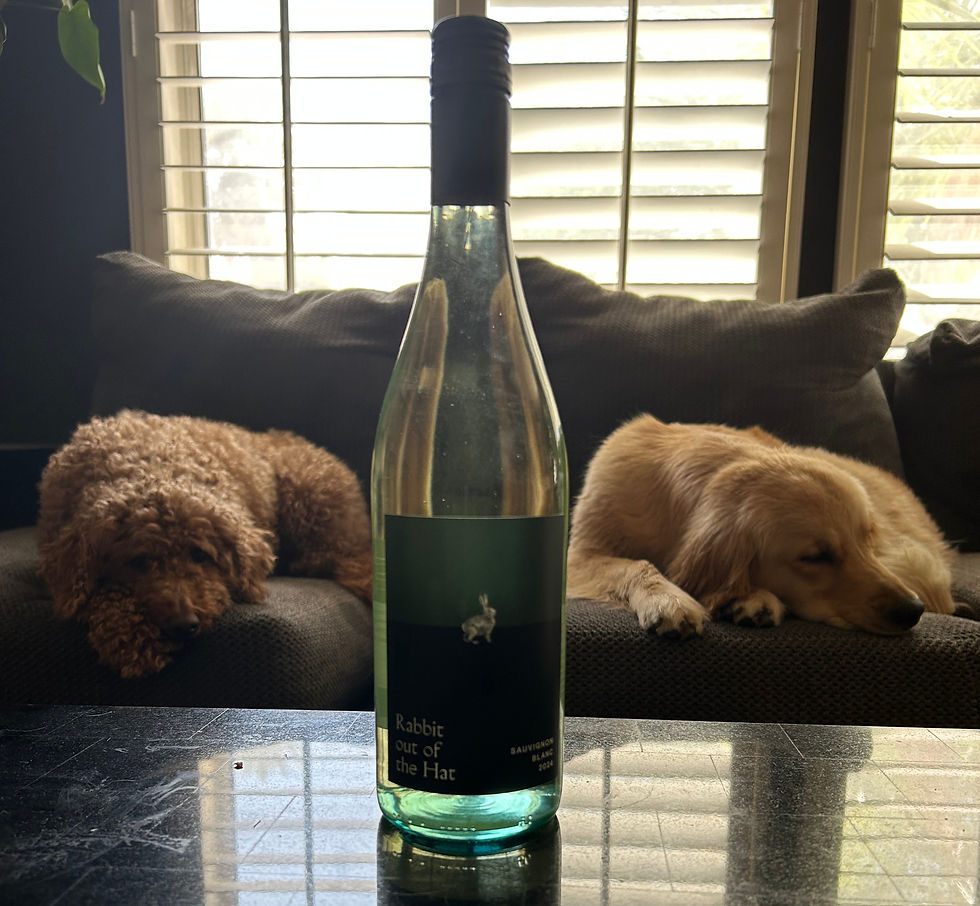
Australia is home to a vibrant array of grape varietals, but a few have become true signatures of the country's wine identity. Shiraz is undoubtedly the star—especially from regions like Barossa Valley and McLaren Vale—offering bold, full-bodied wines bursting with dark fruit, spice, and velvety tannins. Cabernet Sauvignon, particularly from Coonawarra and Margaret River, showcases structured elegance with notes of blackcurrant, eucalyptus, and earthy undertones. Chardonnay, once known for its oaky richness, has evolved into a more refined and diverse expression across regions—from the crisp, citrus-driven styles of Margaret River to the more textured, stone-fruited versions from Yarra Valley. These varietals not only define Australia's global wine presence but also highlight the versatility of its terroir—from sun-drenched valleys to cool coastal hills.

Sideshow Wines, known for their dramatic labels and equally expressive wines, brings the fun with Puppet Master (a dark, jammy red blend) and Ringmaster (a plush Shiraz with a touch of flair). These are made by the renegade South Australian crew focused on approachable, fruit-driven wines with character to spare.
Mollydooker, the brainchild of Sarah and the late Sparky Marquis, takes "full-bodied" to new heights. Their Enchanted Path is a powerhouse blend of Shiraz and Cabernet Sauvignon—rich, velvety, and wildly expressive. Meanwhile, their Ringmaster is a more restrained (for Mollydooker!) yet still plush Shiraz that carries the brand's signature Mclaren Vale ripeness and generosity.
Giant Steps, led by winemaker Melanie Chester (and formerly by Steve Flamsteed), showcases the refined cool-climate beauty of Victoria’s Yarra Valley. Their single-vineyard Pinot Noirs and Chardonnays are cult favorites, and this bottle? A masterclass in balance, elegance, and terroir-driven expression.
As we wrap up our Aussie adventure, we’d love to hear from you! Have you sipped a bold Barossa Shiraz with your pup at your feet, or explored the rolling vineyards of Margaret River with a leash in one hand and a glass in the other? Share your favorite Australian wine memories—and the four-legged companions who made them special—with us in the comments or on social media. And if you’re craving more wine-soaked, tail-wagging travels, don’t forget to subscribe to wineblogwithadog.com. From hidden vineyards to dog-friendly tasting rooms around the globe, we’re just getting started. Cheers to the spirit of the land—where the Aboriginal peoples once walked with dingoes by their side, and where I now explore vineyards with Annie and Lucy trotting beside me, continuing a timeless bond between humans, dogs, and the stories we share. We hope to travel there one day.


Comments